Recipes

  • Truffled mushroom risotto

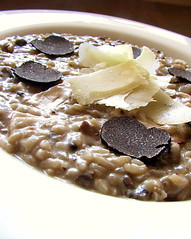
    Truffled mushroom risotto

    Called ‘black gold’ for a good reason, fresh Australian truffles can fetch anywhere from $1000 to $3000 per kilo depending on the intensity of the aroma.

    Aroma is the best indication of truffle quality, not appearance. Big, small, very knobbly or smoother, appearance plays second fiddle to the senses of smell and taste. Truffles have a heady aroma that one not so much smells as senses in the pit of the stomach. It is a very sexy aroma; I’ve seen whole rooms of diners drift into swooning reveries.

    New Zealand and Australian growers have had varying degrees of success with truffières established in the early 1990s. Duncan Garvey’s ‘Perigord Truffles of Tasmania’ harvested the first Australian truffle in June 1999 but truffle production in Tasmania is only now approaching consistent levels. The majority of Australian production is from WA, where it has been something a success story, followed by TAS, with a little more from VIC/NSW.

    If you are lucky enough to source a fresh truffle, local or otherwise, this is the ultimate truffle dish, apart, perhaps, from Buon Ricordo’s (Sydney) truffled egg pasta, which dish Chef Armanda Percuoco is unable to take off the menu for fear of rioting in the streets.
    Mushrooms, rice and cheese are great mates of truffles so I’ve made an ultra mushroomy risotto to complement the shavings of black gold. In the absence of real truffles, invest in a small bottle of good truffle oil and sprinkle that lightly over the risotto just before serving. You’ll get the idea…

    A luxurious dish deserves The Pinot Hedonist’s Trio

    The Recipe

    Truffled mushroom risotto
    15g dried porcini, soaked in 1 cup warm water, strained, liquid and mushrooms reserved
    For the stock:
    1.5 litres chicken stock
    liquid from soaking the porcini
    6 flat brown mushrooms, chopped roughly
    Simmer the chicken stock, liquid from soaking the porcini and the mushrooms together for about 20 minutes. Strain and discard mushrooms. Keep the stock hot.

    For the risotto:
    knob butter & 1 tbsp olive oil
    1 small onion, finely chopped
    3 large flat brown mushrooms, stems removed, caps finely chopped
    1 ½ cups risotto rice
    half glass white wine
    hot stock (as above)
    In a large saucepan heat the butter and a olive oil. Saute the onion until it is translucent but not browned. Add the finely chopped mushrooms and sauté a little longer. Stir in the rice and stir-fry for a minute or two. Add the wine and let bubble away, stirring occasionally. Now add ladles of stock, one at a time, allowing each to absorb before adding the next. The rice should bubble very gently. Stir it occasionally. Cook in this way until the rice is just tender.

    For the mushroom condiment:
    small knob butter
    8 button mushrooms, sliced
    reserved soaked porcini, finely chopped
    big dollop crème fraiche
    salt and pepper
    60g grated Grana or Parmesan
    Saute the button mushrooms and porcini in the butter for a minute or two. Add the crème fraiche and salt and pepper to taste. Cook for half a minute. When the rice is just cooked, stir in the mushroom condiment along with the grated cheese.

    To garnish and serve:
    extra shaved Grana or Parmesan
    shavings of truffle
    Place a large spoonful of risotto in a soup plate. Shake well to spread the risotto flat. Dot with the truffle shavings and garnish with shavings of Grana or Parmesan.
    Continue reading
  • Italian Meat Loaf

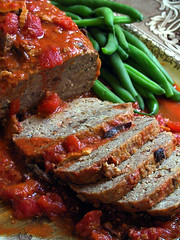
    Italian meat loaf

    Homely and immensely satisfying, there’s nothing quite as comforting as meatloaf.

    Served hot with vegetables, cold as part of a salad or sliced thinly in sandwiches, meatloaf is a star.
    Aussies are used to cooking their meatloaves in a tin and turning them out. The Italians cook them ‘free form’ on top of the stove for the simple reason that Mama’s kitchen often did not have an oven. Dishes that needed to be cooked in an oven went down to the baker once the day’s bread was taken out. This is also true of French cooking; dishes that have the name “boulangere” (baker) give the clue.
    The advantage in cooking a free form meatloaf is that the sauce becomes an integral part of the dish. Keeping the loaf together is dependent on three things –
    • bread dissolved in warm milk and then mixed with a beaten egg – this is the glue that helps bind the loaf
    • mixing and kneading the ingredients well with your hand – this works far better than any implement
    • compacting the shape well when forming the loaf – first rolled into a tight ball and then gently rolled into a fat salami shape.
    A deep and large fry pan (with lid) is the ideal vessel in which to cook the meatloaf – it will take just on an hour.

    Match with a medium bodied Italian Valpolicella 2005 Zenato or even a richly flavoured pinot like new release 2006 Chartley Estate Black Crow Pinot.

    The recipe

    Italian meat loaf
    800g beef topside, minced
    25g dried Italian porcini mushrooms, soaked in half cup warm water for 20 minutes
    1 small onion, very finely chopped – as fine as you can
    1 large clove garlic, very finely chopped
    100g sliced pancetta, chopped
    60g freshly grated Parmesan or Grana
    1-2 tsp salt, plenty of black pepper
    half nutmeg, grated (optional but very good)
    1 thick slice Italian style bread (15cm x 10cm), trimmed of crust
    2 tbsp milk
    1 egg
    dry breadcrumbs
    small knob of butter and 1 tbsp olive oil for sealing the loaf
    1 glass white wine
    1×400g tin Italian tomatoes, diced
    Drain the porcini from the soaking liquid but keep the liquid. Strain the liquid through paper towel or a coffee filter to remove any grit. Chop the porcini roughly.
    Place the beef mince in a large bowl. Add the onion, pancetta, garlic, parmesan, salt, pepper and half the porcini mushrooms (the rest will be used for the sauce). Mix everything well together with a fork, breaking up the mince as you go.
    Break the bread into pieces and place in a small saucepan with the milk. Gently warm and mash the bread into the milk until it is uniform. Take from the heat, cool and beat in the egg with a fork. Pour the bread/milk/egg mixture into the beef and with your hand mix everything very well together. Shape the beef into a compact ball and then roll the mixture into a large salami shape. Gently roll the meatloaf in dry breadcrumbs.
    In a large saucepan heat the butter and oil until foaming. Add the meatloaf and brown on all sides, being careful not to break up the loaf. Add the rest of the porcini mushrooms to the pan and sauté briefly. Add the glass white wine and let bubble away for a few minutes. Add the diced tomatoes. Turn down the heat to a very low simmer, place on a lid and cook the loaf for 30 minutes, turn and cook for a further 30 minutes, this time with the lid askew. Take the loaf from the pan and let rest for a few minutes. If the sauce is a bit thin boil it down for a few minutes. Check for seasoning.
    To serve: Spoon some of the sauce onto a large serving platter. Slice the loaf and place on the platter. Pour the rest of the sauce over and around the loaf. Serve with green beans and oven-roasted potatoes.

    Continue reading
  • Jen's beef bourguignonne

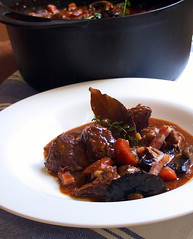
    Jen's beef bourguignonne

    Now is the winter of our discontent made glorious by this classic French braise.

    “I’m in heaven” said one diner, tucking into a second helping. “It was even better the next night” wrote cook Jen when detailing the recipe via email. She might have marvelled that there was any left at all, so delicious was her beef bourguignonne.
    Beouf bourguignonne is not rarefied haute cuisine; it is a hearty dish of provincial France – Burgundy as the name suggests, also the home of grape pinot noir. Wine made of pinot noir expresses itself divinely with melting cubes of beef which have also been marinated in pinot noir and cooked to flavoursome perfection with aromatics (onion, garlic & herbs), carrots, mushrooms and bacon. It made perfect sense that we were eating this dish in pinot territory and drinking with same.
    Two and a half kilos of beef makes enough to feed eight or more happily. The quantity is not difficult to handle; indeed it’s easier to get the oven temperature just right for very slow cooking. Evaporation of liquid is also less of an issue if the cooking vessel is at least two-thirds full. The work is hardly more – a bigger onion, few more cloves of garlic, more thyme, few more carrots. The only downside is that marination will take the whole bottle of wine, the cook missing out on that particular little perk.
    Chuck steak, from the top of the rib just under the shoulder blade, is best but blade (a different cut from the same fore-quarter area) is also good. Cooking time (for nice large cubes) will be about 3 hours at a slow simmer.

    The Recipe

    Jen’s beef bourguignonne
    2-2.5 kg chuck or blade steak cut into 4cm cubes
    1 large onion, sliced into half rings
    2 large carrots, chopped into large pieces
    4 cloves garlic, peeled and crushed
    2-3 bay leaves, fresh or dried, left whole
    6 large sprigs fresh thyme
    1 bottle pinot noir or other soft, light red
    1 large knob butter
    1 tbsp olive oil
    2 large carrots, chopped coarsely
    12 shallots, peeled and cut in half if large
    1 small tub tomato paste
    3 tbsp (level) flour
    200ml veal or beef stock
    salt and pepper
    250g streaky bacon cut into very thick slices
    200g Honey Brown or Portobello mushrooms cut in half

    Place meat, onion, carrot, garlic and herbs in a large stainless steel bowl. Pour over the bottle of wine, cover with plastic wrap and refrigerate overnight.
    Preheat oven to 150C (see note above). Strain the marinade liquid from the beef and vegetables and reserve. On top of the stove heat the butter and oil in a large oven-proof casserole dish. Pick out the vegetables from the meat and sauté them along with two more chopped carrots and the shallots until the vegetables take on some colour. Add the marinated meat, bay leaves, thyme, tub of tomato paste, wine marinade, plenty of ground pepper and 1 tsp salt and stir gently. Whisk together the flour and veal stock and stir into the meat and vegetables. This will thicken the stew as it cooks. Bring to a bare simmer, cover tightly and place in a low oven for about 3 hours or until the meat is very tender.
    Just before the cooking time is up, cut the thick cut streaky bacon into fat strips. Saute in a non-stick frypan until lightly coloured. Remove. Add the mushrooms to the pan and sauté a minute or two, turning once. You may need to add a little extra oil.

    Just before serving add the bacon and mushrooms to the stew. Check for seasoning.

    Serve with potatoes (mashed, roasted or steamed) and a green vegetable on the side.

    Continue reading
  • Gnocchetti Sardi with pork & tomato sauce

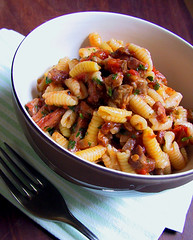
    Sardinian pasta w pork & tomato sauce

    There it was, lonely as a cloud but about to wander into my clutch of purchases, a last packet of Sardinian pasta.

    The cute little ribbed and furled shapes, some of varying shades of yellow from saffron infusion, looked very enticing and never has there been a happier, spontaneous decision.

    In a minor variation on a basic tomato sauce added a slug or two of Montana Reserve Pinot to the sauté of onion and garlic. Reducing the red wine and onion mixture down to a syrupy stage it gives the sauce a richly robust note. The rest of the bottle was a brilliant match with the pasta.

    Really ripe garden tomatoes give the sweetest results but tinned Italian tomatoes out of season are also OK. Small pieces of dry salami cooked with the pork in the tomato sauce is traditional but I used chorizo sausage which happened to be on hand. The choice is yours.

    The gnocchetti was fantastic. Not only did it look very pretty, being of various hues of yellow, but the tiny ribs caught all the tasty flavours of the sauce, especially as the pasta was tossed with the cheese and sauce at the same time. This helps to bind the sauce to the pasta. It’s such great pasta that it survives reheating without morphing into gluggy stodge. In fact it hardly morphed at all. Gnocchetti Sardi allo Zafferano is imported by Melbourne-based Enoteca Sileno. They supply food stores all around the country but if you have trouble sourcing the pasta in your area Enoteco Sileno do mail order. Email retail@enoteca.com.au or Phone 03 9389 7009.

    The Recipe

    Gnocchetti Sardi with pork and tomato sauce

    For the tomato sauce:
    2 tbsp extra virgin olive oil
    1 medium onion, very finely chopped
    3 cloves garlic, finely chopped
    100ml good red wine
    5 large very ripe red tomatoes, skinned (plunge them into boiling water for 30 secs) and chopped
    2 tbsp fresh thyme leaves, roughly chopped
    freshly grated pepper & salt flakes to taste
    ½ tsp sugar
    Heat the olive oil in a medium saucepan. Add the onion and sauté slowly for about 10 minutes until soft and just coloured. Add the red wine and let bubble away until reduced by half. Add the chopped tomatoes, thyme, pepper, salt and sugar. Simmer gently for 15 minutes, uncovered. Check for seasoning. You can make this sauce ahead.

    To complete the dish:
    2 tbsp extra virgin olive oil
    700g pork Scotch (shoulder), cut into small cubes
    150g dried salami or chorizo sausage cut into small strips
    quantity of tomato sauce, see above
    500g Gnocchetti Sardi allo Zafferano, or other small, ribbed pasta
    4 tbsp freshly grated Pecorino Romano (hard Italian grating cheese) or Grana Padano
    3 tbsp Italian parsley, finely chopped

    In a large non-stick frypan heat the olive oil and brown the pork cubes. Add the strips of chorizo sausage and brown. Add the recipe quantity of tomato sauce to the frypan. Simmer gently, covered, for 12-15 minutes. Add a little water if it becomes too thick but it should not be runny.
    Meanwhile cook the pasta in plenty of well salted water according to the packet – in this case 15 minutes. Drain well and place back in the large pan. Immediately add the pork and tomato sauce, cheese and parsley. Toss well to combine all the flavours and serve immediately.

    Continue reading